
The Strategic Case for Ledger Printing in 2026
No CFO wakes up asking, “Is 11×17 paper dead?”
What they do ask—often quietly, and increasingly often—is something more practical:
“Why are we still paying for enterprise-grade copiers when almost everything we print fits on letter-sized paper?”
As organizations head into 2026 with sharper cost discipline and leaner operating models, ledger printing has shifted from a default office capability to a deliberate strategic decision. Not because 11×17 has disappeared—but because its role has changed.
This isn’t a debate about paper — it’s about answering the real business question behind “is 11×17 paper dead?”
It’s a conversation about how intentionally your print environment supports your business.
Is 11×17 Paper Dead? Ledger Printing Is No Longer a Default
For decades, the floor-standing A3 copier was the unquestioned standard. If you had an office, you had machines that could print 11×17. Ledger capability came bundled with the idea of “having a copier,” whether it was used daily or once a quarter.
That assumption no longer holds.
Hybrid work, digital workflows, and cloud-based collaboration have fundamentally changed print behavior. In many organizations, the vast majority of print volume now lives at 8.5 x 11, with only a small percentage requiring anything larger.
The result?
Businesses are no longer asking whether ledger printing exists. They’re asking whether it earns its place.
The Hardware Reality: A3 vs. A4 Printing and the Cost of 11×17 Paper
To understand why this question matters, you have to understand the economics behind the hardware.
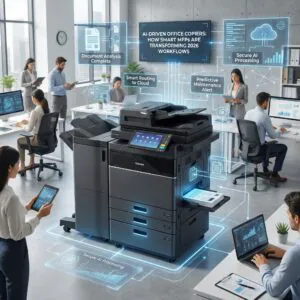
A3 devices—traditional copiers that support 11×17—are built for versatility and durability. They’re larger, more complex, and designed to support a wide range of workflows.
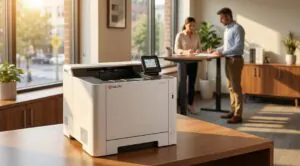
A4 devices, by contrast, cap out at letter and legal sizes. They’re smaller, simpler, and significantly more efficient when ledger printing isn’t part of daily operations.
In real-world terms, organizations often see:
-
25–40% higher lease and service costs for A3 hardware compared to comparable A4 devices
-
Larger physical footprints and higher energy usage
-
Paying for ledger capability even when 90%+ of print volume never uses it
According to the ISO 216 international standard, trimmed paper sizes — including A3 and A4 formats — are defined for administrative, commercial, and technical documents. This standard underpins the global framework for how paper sizes are structured.
When multiplied across departments and locations, the cost delta is no longer trivial. For mid-sized organizations, it often reaches into the five-figure annual range.
That’s why this conversation has moved out of IT and into the executive suite.
Where 11×17 Still Matters — And Always Will
Declaring ledger printing “dead” would be a mistake.
In the right environments, removing 11×17 doesn’t save money—it slows decisions, increases errors, and creates friction.
1. Finance and Executive Review
For finance teams, ledger printing remains a critical tool.
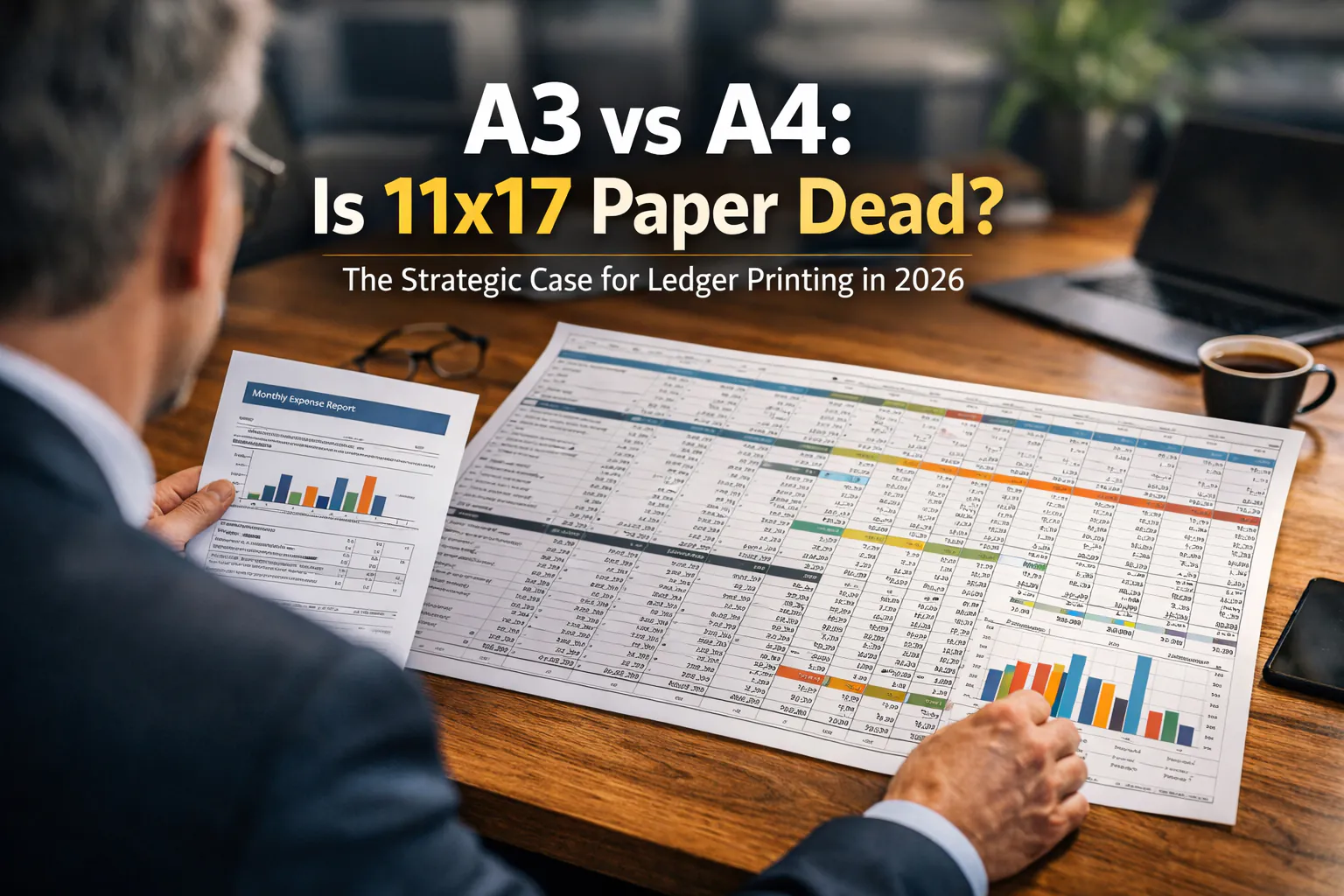
Large Excel models, multi-column P&L statements, depreciation schedules, and forecast comparisons lose clarity when forced onto letter-sized pages. Shrinking spreadsheets introduces cognitive friction at exactly the moment clarity matters most.
In finance, 11×17 isn’t about preference—it’s about decision velocity and risk reduction.
2. Architecture, Engineering, and Construction
In A/E/C environments, digital plans are everywhere—but paper hasn’t gone away.
Project managers and field teams still rely on physical drawings to see full layouts without constant zooming, panning, or device limitations. For these workflows, A3 and wider formats are not legacy tools—they’re operational necessities.
In these cases, ledger printing isn’t optional. It’s foundational.
The 2026 Reality: This Is an Operating Model Decision
By 2026, print technology strategy is no longer a hardware discussion.
It’s an operating model decision.
The most effective organizations are no longer choosing between “all A3” or “no A3.” They’re designing intentionally around actual usage.
The 90/10 Reality
In many environments:
-
90% of employees never print 11×17
-
10% absolutely need it
The answer isn’t over-equipping everyone—or eliminating capability entirely.
The answer is right-sizing.
A4 devices serve the general population efficiently and cost-effectively, while a smaller number of strategically placed A3 devices support the workflows that truly require ledger output.
This approach reduces cost without compromising capability.
When Outsourcing Becomes the Smarter Choice
For some organizations, even a shared A3 device is more than they need.
If ledger printing only shows up for:
-
Quarterly board packets
-
Annual reports
-
Marketing layouts or internal planning materials
…then owning A3 hardware may not make sense at all.
This is where outsourced print production becomes strategically relevant.
Rather than carrying underutilized equipment year-round, organizations increasingly treat 11×17 and specialty print work as on-demand services—produced when needed, with higher quality control, and without internal overhead.
At Doceo, our Outsourced Printing Division operates exactly this way. Acting as an extension of our clients’ offices, we produce complex ledger documents, bound materials, and specialty print work on production-grade equipment—and deliver finished pieces ready for use.
The result is a leaner internal fleet and better output where it matters.
The Bottom Line
So—is 11×17 paper dead?
No.
But the era of placing an 11×17-capable copier on every corner of the office is over.
In 2026, the most effective organizations don’t eliminate ledger printing. They design around it intentionally—aligning capability with real workflows, not legacy assumptions.
The real question isn’t whether ledger printing still matters.
It’s whether you’re paying for it by default, or deploying it with purpose.
If you’re evaluating how ledger printing fits into your environment today, a structured print assessment can bring clarity to the math and the strategy.
Talk with a Doceo Advisor